Difference Between Serial And Random Access Memory Images
Random Access Memory is volatile. That means data is retained in RAM as long as the computer is on, but it is lost when the computer is turned off.
In computing, sequential access memory (SAM) is a class of data storage devices that read stored data in a sequence. This is in contrast to random access memory (RAM) where data can be accessed in any order.
When the computer is rebooted, the OS and other files are reloaded into RAM, usually from an HDD or SSD. What Random Access Memory is used for Because of its volatility, Random Access Memory can't store permanent data. RAM can be compared to a person's short-term memory, and a hard drive to a person's long-term memory. Short-term memory is focused on immediate work, but it can only keep a limited number of facts in view at any one time. When a person's short-term memory fills up, it can be refreshed with facts stored in the brain's long-term memory. A computer also works this way.
If RAM fills up, the computer's processor must repeatedly go to the hard disk to overlay the old data in RAM with new data. This process slows the computer's operation. A computer's hard disk can become completely full of data and unable to take any more, but RAM won't run out of memory. However, the combination of RAM and storage memory can be completely used up. How does RAM work?
The term random access as applied to RAM comes from the fact that any storage location, also known as any memory address, can be accessed directly. Originally, the term Random Access Memory was used to distinguish regular core memory from offline memory. Offline memory typically referred to from which a specific piece of data could only be accessed by locating the address sequentially, starting at the beginning of the tape. RAM is organized and controlled in a way that enables data to be stored and retrieved directly to and from specific locations. Other types of storage -- such as the hard drive and -- are also accessed directly or randomly, but the term random access isn't used to describe these other types of storage.
RAM is similar in concept to a set of boxes in which each box can hold a 0 or a 1. Each box has a unique address that is found by counting across the columns and down the rows. A set of RAM boxes is called an, and each box is known as a cell. To find a specific cell, the RAM controller sends the column and row address down a thin electrical line etched into the chip. Each row and column in a RAM array has its own address line.
Caterpillar Factory Password Keygen cat. Get Cat Et 2017A download cat electronic technician crack. Caterpillar ET factory password Generator ECM. Caterpillar et factory passwords change keygen generator crack. Login Username: Password:|. New et factory passwords generator support win xp 8 10 forcat china. Factory password keygen free online installation! Caterpillar cat sis 2016 epc and service information flash dvd files. The factory password to change hours on cat machines is not just something your local cat dealer can get to service your machine. Change Caterpillar ECM Parameters with CAT ET & CAT Factory password. Generator Keygen CAT ET Factory Password Generator ET Factory Password Keygen ET Factory. CATERPILLAR Factory Password Generator Keygen CAT ET Factory Password Generator ET Factory Password Keygen ET Factory Password Crack Y-TECH Auto Service Mob: +2 0100 88 75 968 Whatsapp: +2 0100. Caterpillar ET 2017 Factory password Generator 2017 working 100% change Caterpillar ECM Parameters with CAT ET & CAT Factory password CATERPILLAR Factory Password generator.
Any data that's read flows back on a separate data line. RAM is physically small and stored in. It's also small in terms of the amount of data it can hold.
A typical laptop computer may come with 8 gigabytes of RAM, while a hard disk can hold 10 terabytes. In this video, Logical Increments describes how RAM works. RAM microchips are gathered together into memory, which plug into slots in a computer's. A, or a set of electrical paths, is used to connect the motherboard slots to the processor.
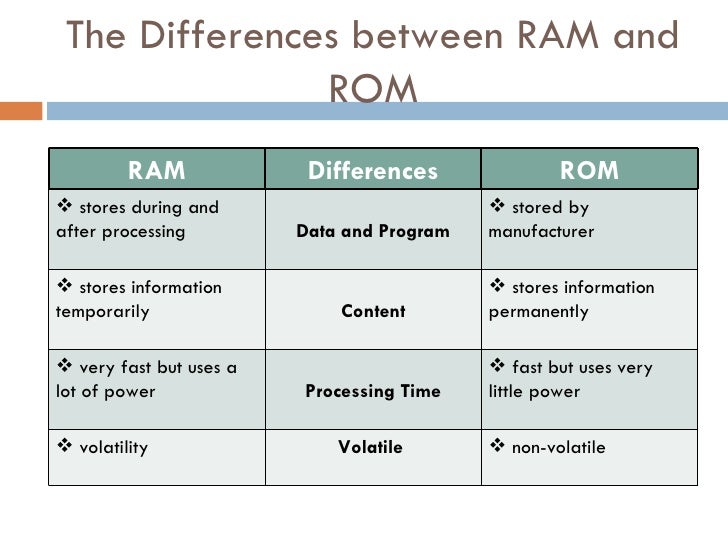
A hard drive, on the other hand, stores data on the magnetized surface of what looks like a vinyl record. And, alternatively, an SSD stores data in memory chips that, unlike RAM, are nonvolatile, don't depend on having constant power and won't lose data once the power is turned off. Most PCs enable users to add RAM modules up to a certain limit. Having more RAM in a computer cuts down on the number of times the processor must read data from the hard disk, an operation that takes longer than reading data from RAM. RAM access time is in, while storage memory access time is in. Types of Random Access Memory RAM comes in two primary forms: Dynamic Random Access Memory ( ) makes up the typical computing device's RAM and, as was previously noted, it needs that power to be on to retain stored data.