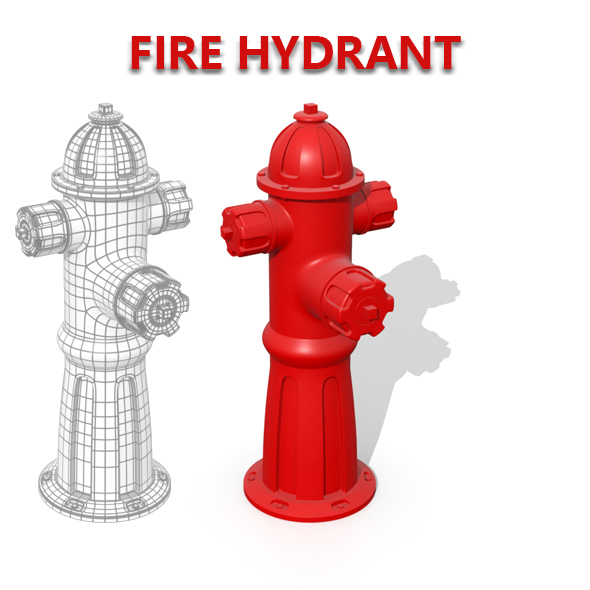
Fire Hydrant Autocad Dwg
Sep 25, 2015 - Download free CAD drawing of a fire hydrant detail to be used in your mechanical CAD drawings. Fire Hydrants. A-411: 2-1/8' Standard Hydrant 1-way & 2-way w/MJ/thrd/flng. Hydrant Security. 850M: 6' SA -Series Check Valve - MJ ends (Drawing #M50525).
If you do not create an armature, the system creates a fitting at the location where the pipe is attached to the main pipe (feature rule). • In the Industry Model Explorer, click the Workflow explorer icon.
• Right-click Fire Hydrant Creation. • Click Execute. • Specify a reference record, if any.
• Under Pipe from Hydrant to Main Pipe, select Straight Pipe or Digitize Pipe. If you choose Straight Pipe you are prompted to select the main pipe in the drawing.
The connection is created as an orthogonal projection on the main pipe. • Specify whether to add an armature, or a valve on the main pipe. Soal toefl dan pembahasannya 2015 best. • Follow the prompts. • Press ESC to finish the workflow. When you are finished creating geometry, the feature class form is displayed so you can add attribute data.
Contents • • • • • • • • • • • • • Operation The user attaches a to the fire hydrant, then opens a on the hydrant to provide a powerful flow of water, on the order of 350 (50 pounds per square inch gauge (psig)) (this pressure varies according to region and depends on various factors including the size and location of the attached water main). This user can attach this hose to a, which can use a powerful to boost the and possibly split it into multiple streams. One may connect the hose with a connection, instantaneous ' or a.
A user should take care not to open or close a fire hydrant too quickly, as this can cause a, which can damage nearby pipes and equipment. The water inside a charged hose line causes it to be very heavy and high water pressure causes it to be stiff and unable to make a tight turn while pressurized. When a fire hydrant is unobstructed, this is not a problem, as there is enough room to adequately position the hose. Most fire hydrant valves are not designed to throttle the water flow; they are designed to be operated full-on or full-off.
The valving arrangement of most dry-barrel hydrants is for the drain valve to be open at anything other than full operation. Usage at partial-opening can consequently result in considerable flow directly into the soil surrounding the hydrant, which, over time, can cause severe scouring.
Gate or butterfly valves can be installed directly onto the hydrant orifices to control individual outputs and allow for changing equipment connections without turning off the flow to other orifices. These valves can be up to 12 inches in diameter to accommodate the large central 'steamer' orifices on many US hydrants. It is good practice to install valves on all orifices before using a hydrant as the protective caps are unreliable and can cause major injury if they fail. When operating a hydrant, a typically wears appropriate, such as and a with face shield worn.